Customizing a themed indoor playground follows a structured process: site measurement and CAD planning, theme and material selection, manufacturing, shipping, and on-site installation. The entire project typically takes 30 to 60 days from design confirmation to installation completion, though timelines vary by project size and complexity. Understanding each stage helps buyers plan their project realistically and communicate effectively with the equipment manufacturer.
What the Customization Process Actually Covers
When a buyer decides to build a themed indoor playground, the process involves more than selecting equipment from a catalog. A full customization project includes site measurement, layout planning, theme design, structural engineering, material selection, manufacturing, quality inspection, packaging, shipping, and installation. Each stage requires coordination between the buyer and the manufacturer, and decisions made early in the process affect the timeline, budget, and final result.
A themed playground equipment project starts with a conversation about the available space, target age group, desired theme, and budget parameters. From there, the manufacturer translates the buyer's requirements into technical drawings and production plans.
Step 1: Site Measurement and Space Planning
Before any design work begins, accurate site measurements are needed. The buyer typically provides:
- Floor plan dimensions (length, width, and ceiling height)
- Column locations and any fixed obstacles
- Entry and exit points
- Emergency access routes
- Existing utility connections (power, water, ventilation)
If the buyer cannot provide detailed measurements, some manufacturers offer on-site measurement services or can work with architectural drawings.
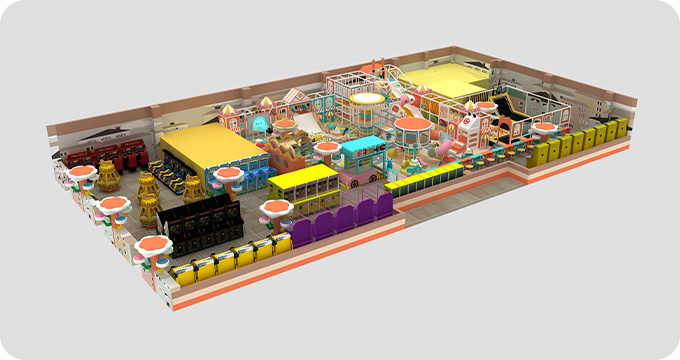
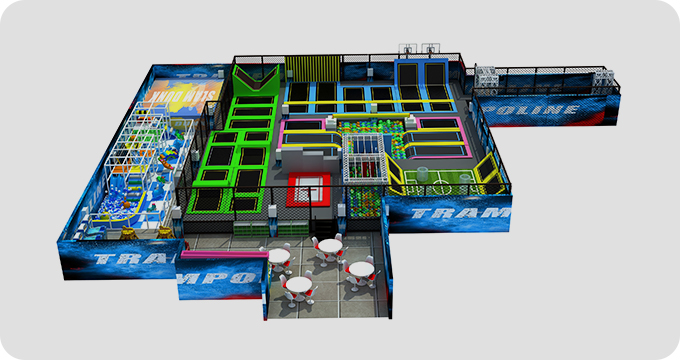
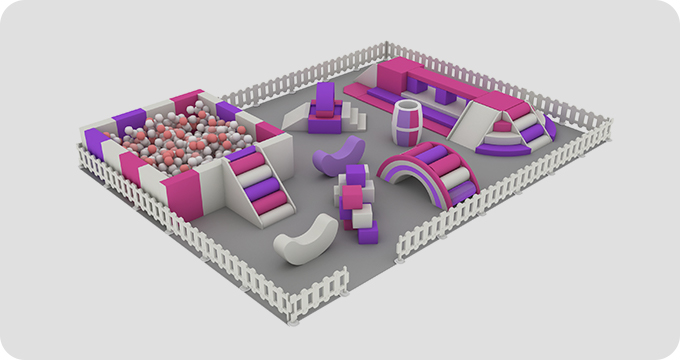
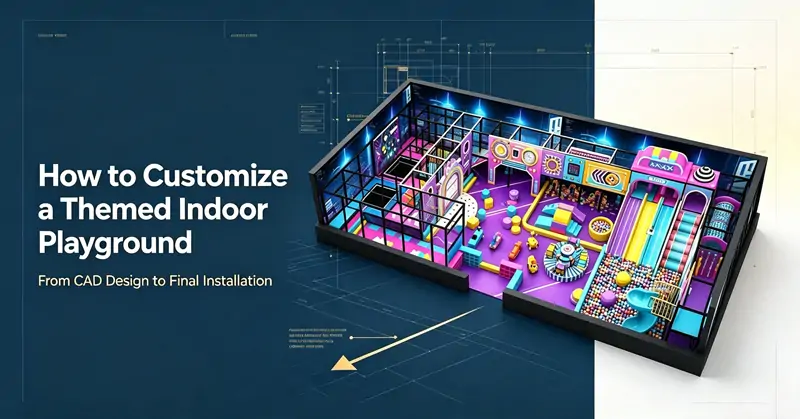
The manufacturer uses these measurements to create a CAD layout that maximizes the play area while maintaining safe traffic flow. Clearances around equipment, distance between play zones, and adult supervision sightlines are factored into the layout. A well-planned CAD drawing shows not only equipment placement but also safety zones, fall heights, and capacity distribution.
For buyers reviewing project feasibility at this stage, exploring existing indoor playground Equipment configurations provides reference for what can be achieved within different space constraints.
Step 2: Theme Selection and Design
The theme defines the visual identity and play experience of the entire playground. Common themes include:
| Theme Category |
Characteristics |
Best For |
| Nature (Jungle, Ocean, Forest) |
Organic shapes, animal elements, green/blue tones |
Younger children, family-friendly venues |
| Fantasy (Candy, Fairy Tale, Castle) |
Bright colors, whimsical shapes, storybook feel |
Toddlers and preschool-aged children |
| Futuristic (Space, Cyber, Neon) |
Geometric shapes, LED integration, metallic finishes |
Older children, modern entertainment centers |
| Adventure (Pirate, Dinosaur, Explorer) |
Themed props, interactive elements, discovery zones |
Mixed-age groups, high-engagement venues |
Theme selection should consider the target customer demographic, local cultural preferences, and the venue's overall brand positioning. A shopping mall family center may prefer a universal nature theme, while a standalone entertainment venue might choose a distinctive cyber or adventure theme to differentiate itself.
The design phase produces 3D renderings and elevation drawings that show how each play element fits within the theme. Buyers review and approve these renderings before the project moves into engineering.
Step 3: Material Selection and Quality Specifications
The materials used in themed playground equipment directly affect safety, durability, and maintenance requirements. Buyers should understand the standard material specifications offered by the manufacturer:
| Component |
Common Specification |
What to Verify |
| Structural frame |
Hot-galvanized steel pipe, ≥48mm diameter, ≥1.8mm wall thickness |
Corrosion resistance, load-bearing capacity |
| Platform and panels |
Plywood ≥2cm thick, flame-retardant, moisture ≤8% |
Resistance to warping and mold |
| Soft padding |
EPE foam ≥1.5cm + high-density foam layer |
Impact absorption, comfort |
| Flooring |
EVA mat ≥2.0cm, high density |
Slip resistance, easy cleaning |
| Surface printing |
UV inkjet, 10-year fade resistance |
Color retention, non-toxic |
| Fasteners and connectors |
Hot-coated galvanized, thickened |
Rust resistance, structural integrity |
Buyers should request material specifications in writing and verify that the manufacturer's stated materials match international safety standards such as EN1176 (European playground equipment standard) or ASTM F1487 (US standard). Third-party testing reports from recognized laboratories provide additional verification.
Step 4: Engineering and Structural Breakdown
After the design is approved, the manufacturer creates engineering breakdown drawings. These technical documents show:
- Individual component dimensions and connection points
- Load-bearing calculations for elevated structures
- Fastener specifications for each joint
- Assembly sequence and module grouping
This stage is where the design becomes a producible product. The engineering team ensures that every curved slide, climbing net attachment, and themed panel can be manufactured to specification and assembled safely on site.
For the buyer, this stage produces the documentation needed for local building permits or safety approvals. Having access to the manufacturer's technical and service capabilities at this point helps ensure that engineering questions can be resolved efficiently.
Step 5: Manufacturing and Quality Inspection
Manufacturing lead time varies by project size. A typical themed playground of 100 to 200 square meters may require 15 to 30 working days of production. Larger or more complex projects extend this timeline.
During manufacturing, quality inspections check:
- Weld integrity on steel frames
- Foam density and thickness against specification
- Plywood moisture content and flame retardancy
- Print quality and color consistency on themed panels
- Dimensional accuracy of individual components
Reputable manufacturers conduct inspections at multiple production stages—raw material receiving, in-process checks, and final pre-packaging inspection. Buyers should ask about the manufacturer's quality control process and whether third-party inspection is available.
Step 6: Packaging, Shipping, and Site Preparation
Once manufacturing is complete and inspected, components are packaged and prepared for shipping. The manufacturer provides:
- Detailed packing list organized by installation module
- Labeled components matching installation drawings
- Spare fasteners and small parts
- Installation manual and video guides
During shipping transit, the buyer should prepare the site according to the manufacturer's recommendations:
- Confirm that the floor is level and load-bearing capacity meets requirements
- Ensure power and lighting are available for installation work
- Clear the installation area of obstructions
- Arrange for equipment unloading and on-site storage
Step 7: Installation and Final Inspection
Installation follows the assembly sequence defined in the engineering drawings. For buyers who do not have local installation capability, the manufacturer may offer overseas installation services or provide detailed guidance for local teams.
A typical installation timeline depends on equipment size. For reference, a 100-square-meter playground may require 2 workers approximately 10 to 15 days to complete, though actual time varies by configuration complexity.
After installation, a final inspection should verify:
- All fasteners are properly tightened
- Soft surfaces are securely attached with no exposed edges
- Moving parts (slides, swings, interactive elements) operate smoothly
- Safety clearances around equipment meet standards
- Emergency exits and access routes are unobstructed
Project Planning Checklist
Before the project begins:
During design and engineering:
-
Review material specifications
-
Approve CAD layout
-
Approve 3D renderings and theme design
-
Receive engineering drawings
-
Request safety certification documentation
Before and during installation:
-
Confirm production timeline
-
Arrange shipping and delivery
-
Complete site preparation
-
Confirm installation team or service
-
Conduct final safety inspection
-
Establish a maintenance plan
Factors That Affect Project Timeline and Cost
Several variables influence how long a themed playground project takes and what resources it requires:
- Project size. Larger play areas naturally require more equipment, longer manufacturing time, and extended installation.
- Theme complexity. A simple color-themed design produces faster than a fully customized themed environment with sculpted elements, custom props, and integrated lighting.
- Material and finish choices. Standard material specifications have predictable lead times. Custom finishes or specialized materials may extend production.
- Site readiness. Delays in site preparation—uneven flooring, missing utilities, late building approvals—affect the installation schedule regardless of manufacturing completion.
- Shipping distance and logistics. International shipping adds transit time and requires customs clearance planning.
Frequently Asked Questions
Q: How long does a full customization project take from start to finish?
A: A typical project for a 100–200 square meter themed playground takes approximately 30 to 60 days from design confirmation to installation completion. This includes 15–30 working days for production and additional time for shipping and installation depending on location and project size.
Q: Can I use my own design or logo in the themed playground?
A: Most manufacturers offer OEM/ODM services and can incorporate custom logos, color schemes, and design elements. Provide your artwork or brand guidelines early in the design phase for best results.
Q: Do I need to prepare anything before installation begins?
A: Yes. The site should have a level floor, adequate ceiling height as specified in the design, available power supply, and clear access for equipment delivery. The manufacturer should provide site preparation requirements before shipping.
Q: What safety standards should themed playground equipment meet?
A: For European markets, EN1176 is the relevant standard. For the US, ASTM F1487 applies. Additional certifications such as CE, TUV, and third-party testing through SGS or Intertek provide further verification. Request documentation from the manufacturer.
Q: Can the manufacturer handle installation if I do not have a local team?
A: Some manufacturers offer overseas installation services or can send a supervising technician to guide a locally hired team. Confirm this service availability during the initial project discussion.
Q: What maintenance does a themed indoor playground require after installation?
A: Daily checks should verify fastener tightness and surface condition. Weekly inspections should examine load-bearing structures and moving parts. Monthly safety device testing and deep cleaning are recommended. The manufacturer should provide a maintenance manual specific to the installed equipment.
Managing a Custom Playground Project With Confidence
A successful themed indoor playground project depends on clear communication between the buyer and the manufacturer at each stage—from site measurement through final inspection. The most important decisions are made early: confirming accurate site dimensions, selecting a theme that matches the target audience, and specifying materials that balance durability with budget.
Buyers who understand the workflow can set realistic timelines, prepare their site properly, and evaluate manufacturer proposals with clear criteria. When reviewing available themed playground equipment options, comparing not just the designs but also the manufacturer's process documentation, quality control procedures, and installation support helps identify the right partner for the project.




 English
 Español