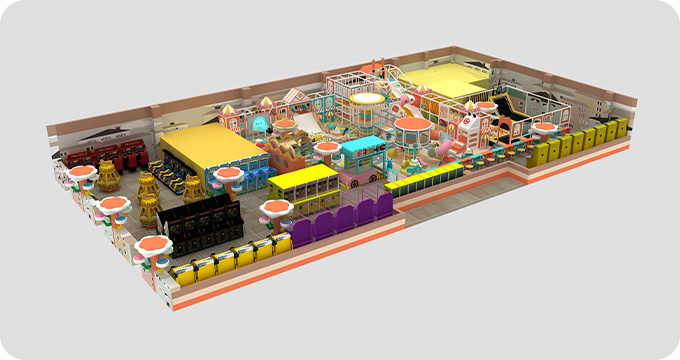
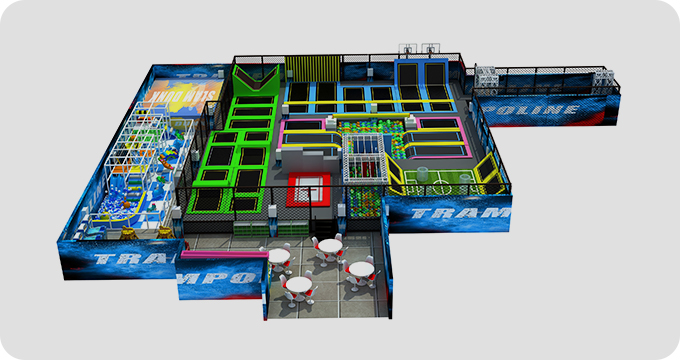
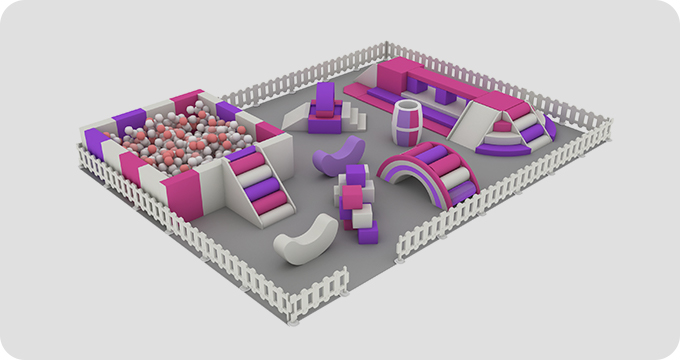
Indoor play centres today compete not just with each other but with tablets, organised sports, and the countless other activities that occupy family time. A multicoloured frame with a slide and a ball pit may be enough to satisfy a toddler on a single visit, but it rarely creates the sense of destination that prompts a child to ask, “Can we go back to the dinosaur place tomorrow?” That emotional pull is built on theme – a coherent visual and narrative environment that transforms physical equipment into a world children want to inhabit repeatedly.
Theme design is often treated as an aesthetic afterthought, something decided once the equipment list is finalised. In practice, it is the commercial engine of a play centre: it drives word‑of‑mouth, provides the backdrop for every parent’s social media post, and gives a venue a distinct identity in a crowded market. Getting the theme right is not about picking a colour scheme; it is about understanding how design influences repeat visitation.
Why a Strong Theme Encourages Returns
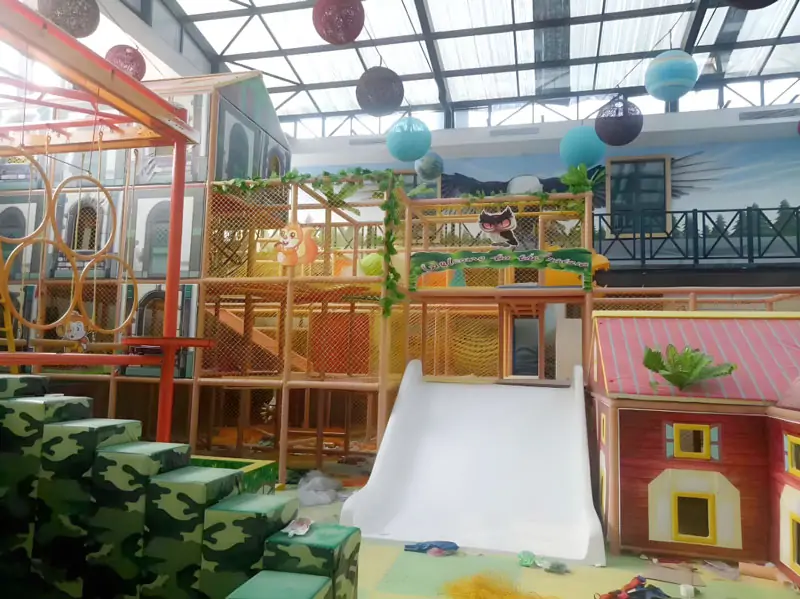
Children under ten engage with play environments through narrative. A rope bridge is not just a physical challenge – it is a crossing over a lava river in a volcano adventure. A spiral slide becomes the escape tunnel from a dragon’s cave. When every element in the space reinforces a single story, the child’s imagination stays engaged far longer, and the memory of the visit lasts. That memory is what triggers the request to return.
For parents, a well‑executed theme provides two things: a sense that the outing is a curated experience worth the entry fee, and a visual environment that photographs well. Social media exposure is free marketing for the centre. A play area with a generic, multicoloured layout rarely inspires a parent to share a photo. A centre designed as a snow kingdom or a pirate cove with custom‑printed UV panels and coordinated ball colours generates the kind of visual content that fills local parenting groups and drives new foot traffic.
Themed environments also help operators manage capacity across age groups. A space‑themed zone with interactive projection games and climbing walls appeals to school‑aged children, while a separate forest village with low‑level soft play suits toddlers. This zoning, when designed coherently within an overarching theme, allows siblings of different ages to stay longer because each child finds an appropriate zone – and longer stays correlate directly with higher food and beverage sales.
What Makes a Theme Commercially Viable
Not every attractive concept translates into a profitable installation. A commercially viable theme must satisfy three conditions.
First, it must be executable within the safety constraints of the relevant standards. EN 1176 and ASTM F1487 set requirements for guardrails, entrapment gaps, and impact attenuation that cannot be compromised for visual effect. A dragon’s mouth that acts as a tunnel entrance must still meet minimum height and width specifications. Working with a supplier that has in‑house design and engineering capability, such as those providing custom‑themed play structures designed for heavy commercial traffic, ensures that the artistic concept is translated into compliant production drawings.
Second, the theme must be durable. Indoor play centres see hundreds of children per day, and painted or wrapped surfaces that look good at opening but wear through in six months create a poor impression and maintenance burden. Materials like UV‑printed PVC‑leather‑wrapped soft padding, hot‑dip galvanised steel frames, and thick EPE foam with high‑density outer layers all contribute to a theme that looks fresh years after installation. The choice of printing technology matters: UV inkjet printing directly onto panels can provide ten‑year fade resistance, a significant advantage over ordinary ink that washes out under cleaning chemicals and general wear.
Third, the theme should be flexible enough to evolve. An operator who launches with a “jungle” concept may want to add an “ocean” zone in a second phase or swap out decorative panels to refresh the look after three years. Modular custom‑designed environments allow this incremental renewal, keeping the centre relevant without a complete refit.
The Customisation Process: From Floor Plan to Finished Space
Custom theme design typically follows a structured path. The operator provides the space dimensions, target age groups, budget parameters, and any brand or cultural preferences. The design team produces a CAD site plan showing the placement of every structure, sight lines for parent supervision, and circulation paths. This is overlaid with 3D renderings of the themed environment.
Once the layout is approved, the engineering team breaks down the design into production components: steel frames, soft‑play elements, plastic slides, decorative panels, and interactive electronics if required. Each component is fabricated and assembled in the factory for quality control, then disassembled and packed for shipping. The installation team – or the operator’s own crew using the provided installation drawings and videos – reassembles the equipment on site.
During this process, the theme is embedded into every decision, from the colour of the ball pool balls to the shape of the climbing holds. Providers that offer complete themed play solutions encompassing design, CAD planning, and overseas installation support reduce the coordination burden on the operator, who otherwise must manage separate suppliers for design, equipment, and installation.
Real‑World Themes That Resonate
Without referencing any single client, certain theme categories consistently perform well across different markets. Jungle and forest themes appeal to younger children because they connect to familiar animals and fairy‑tale settings. Ocean and mermaid themes are popular in coastal regions and for unisex appeal. Space and galaxy themes attract the 6‑to‑12 age range with a sense of adventure and technology. Castle, pirate, and winter themes create strong visual identities that are easy to market.
The manufacturer’s portfolio can provide a useful reference. For example, among Woozone’s themed indoor play projects, various setups illustrate how a consistent theme – applied across the soft‑play area, interactive zone, and even the flooring – creates an immersive result. Operators evaluating potential suppliers can examine these examples to judge whether the manufacturer’s design language aligns with the local market’s tastes.
Common Mistakes That Dilute a Theme
A theme can fail when it is applied inconsistently. If the play structure is jungle‑themed but the surrounding walls are white, the ceiling is exposed ductwork, and the flooring is a standard grey tile, the immersion breaks. Theming must extend at least to the visual perimeter of the play zone.
Another mistake is choosing a theme without validating it with the local community. Dinosaur themes perform brilliantly in some neighbourhoods and fall flat in others. Short, informal surveys of local families – or simply observing which themed birthday parties are most requested in the area – can ground the decision in real demand.
Operators sometimes underestimate the importance of staff training in delivering a themed experience. A receptionist who says, “The astronaut training camp is through the red door on your left”, reinforces the narrative and sets expectations. Simple scripting turns a check‑in into the start of the adventure.
The Long‑Term Value of a Distinct Identity
In most cities, families have multiple indoor play options within a short drive. The venue with the strongest identity – the one that becomes “the jungle place” or “the space centre” in local conversation – captures a disproportionate share of the market. That identity is not built on the number of slides but on how the space makes children and parents feel. A custom theme, properly executed, is the most effective tool an operator has to create that feeling and convert a one‑time visitor into a regular.
Choosing the right partner for a themed build means finding a supplier who treats design as an engineering discipline, not just decoration. The materials, safety certifications, and after‑sales support all contribute to whether the theme remains vibrant and profitable over the equipment’s full service life. For operators looking to explore theme options built on durable, certified structures, Woozone’s range of custom‑themed indoor play equipment provides a useful starting point for evaluating what is possible within a given footprint and budget.
A well‑chosen theme is not an expense but an investment in a play centre’s brand. It gives children a reason to come back, parents a reason to take photos, and the business a reason to charge a premium. In a market where generic equipment is abundant, custom theme design is the factor that sets successful venues apart.




 English
 Español